
In the 1940s and 1950s, boys living at the Walter E. Fernald State School in Massachusetts were offered an opportunity that probably sounded pretty exciting: they could join a special science club.
Fernald was an institution for children with intellectual disabilities, although many of the boys sent there would not necessarily be considered intellectually disabled by modern standards. Some had learning difficulties, while others had been placed there because they came from poor or unstable homes. Once inside, they lived under the control of an institution that had enormous authority over nearly every part of their lives.
The new club was called the Science Club, and membership came with benefits. The boys received special attention, went on outings and were given meals that could seem like a privilege compared with ordinary institutional life. Scientists monitored their health, performed tests and made the children feel as though they had been specially selected.
What the boys weren't adequately told was that they weren't simply members of a science club.
They were the research subjects.
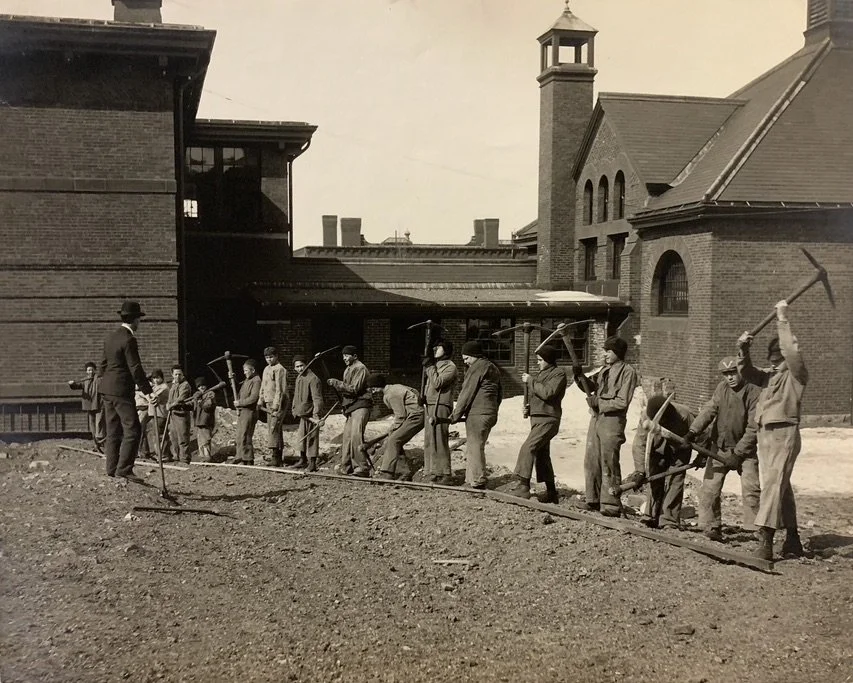
The Fernald Science Club
Beginning in the late 1940s, researchers from MIT and Harvard conducted nutrition experiments involving boys at Fernald. The research was intended to study how the human body absorbed nutrients, particularly calcium and iron.
To track those substances as they moved through the body, researchers used radioactive tracers.
That meant some of the boys' meals contained small amounts of radioactive material.
One of the experiments involved a breakfast that sounds completely ordinary: oatmeal and milk. The oatmeal was supplied by Quaker Oats, which was involved in sponsoring the research, while radioactive isotopes were added so researchers could follow how nutrients were absorbed and retained by the boys' bodies.
The children ate their breakfasts while scientists collected samples and monitored what happened afterward.
To the researchers, the radioactive material was a tool that allowed them to see something that otherwise would have been extremely difficult to measure.
To the boys, it was breakfast.
What Did the Boys Know?
This is one of the most important parts of the Fernald story because the experiments weren't simply controversial because radiation was involved. Radioactive tracers were used in legitimate medical research during this period, and the doses involved in the Fernald experiments were relatively small.
The ethical problem was who was being used for the research and whether they—or the adults responsible for them—actually understood what they were agreeing to.
These were institutionalized children. Researchers were offering them privileges through a special club while simultaneously recruiting them as experimental subjects. That created an enormous imbalance of power before anyone even began discussing radiation.
Parents or guardians were asked for permission in at least some of the studies, but the descriptions they received did not always make the nature of the experiments particularly obvious. Letters described things like nutrition studies and blood tests without clearly emphasizing that radioactive substances would be administered to the children.
The boys themselves certainly weren't sitting down with an informed-consent document explaining radiation exposure and deciding whether the scientific benefits justified the risks.
They thought they had joined the Science Club.
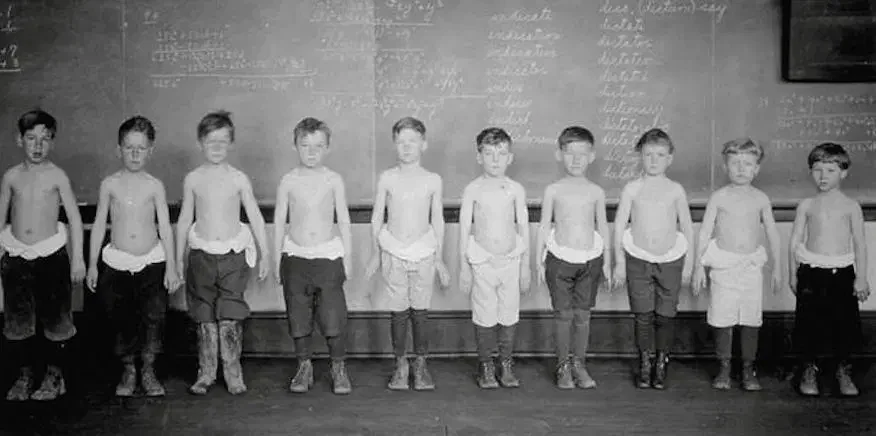
Why Radioactive Oatmeal?
As bizarre as radioactive oatmeal sounds today, there was a scientific reason researchers wanted to use it.
Quaker Oats had an interest in research surrounding nutrition and the absorption of minerals from cereal. Researchers wanted to understand how calcium and iron behaved inside the human body, and radioactive isotopes made those substances easier to trace.
The boys could eat a meal containing the tracer, and scientists could then measure where the material went and how much was absorbed.
From a purely experimental perspective, it was useful.
From an ethical perspective, choosing institutionalized children who had little control over their circumstances was another matter entirely.
And Fernald wasn't an isolated example.
The Human Radiation Experiments
During and after World War II, the United States became intensely interested in understanding radiation. Nuclear weapons, nuclear energy and radioactive materials had created an entirely new field of research, and scientists wanted to know what radiation did to the human body.
Some of that research involved human beings who understood what they were participating in.
Some very clearly did not.
Hospital patients, pregnant women, prisoners, people with disabilities and other vulnerable populations were used in radiation experiments conducted or supported by government agencies and research institutions. In some cases, people were injected with radioactive substances without being adequately informed about what was happening.
The Fernald experiments eventually became part of this much larger history.
Decades passed before many of the people involved learned what had actually been done to them.
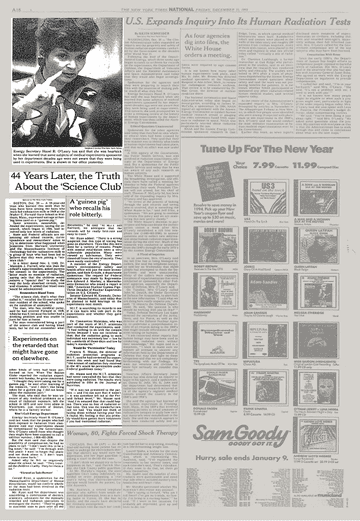
The Experiments Come to Light
In the early 1990s, the United States began taking a much closer look at Cold War-era radiation experiments involving human subjects. The administration of President Bill Clinton created the Advisory Committee on Human Radiation Experiments in 1994 to investigate federally sponsored research and determine what had happened.
Thousands of records were examined, and stories that had spent decades buried in government files began receiving public attention.
The experiments at Fernald were among them.
Former residents who had once believed they were simply members of a children's Science Club learned that scientists had deliberately given them radioactive tracers as part of research conducted decades earlier.
For some of the men, the revelation wasn't only about whether the radiation had physically harmed them. It was the realization that adults they had trusted had treated them as research subjects without giving them a meaningful opportunity to understand or refuse.
Were the Boys Harmed by the Radiation?
This part of the story can easily become exaggerated.
The Fernald experiments are sometimes described as though scientists were feeding children enormous quantities of dangerous nuclear waste. That's not what happened. The radioactive tracers involved relatively low doses, and later assessments did not conclude that the boys had received the kind of radiation exposure associated with acute radiation sickness.
But focusing exclusively on whether the dose was high enough to cause measurable physical harm misses much of the reason the experiments became infamous.
The researchers deliberately selected a vulnerable population. The children lived in an institution and had very little independence. The Science Club offered benefits and privileges that made participation attractive, while the true nature of the experiments wasn't adequately communicated.
Modern research ethics place enormous importance on informed consent precisely because of cases like this.
A person doesn't have to be physically injured before experimenting on them without meaningful consent becomes a problem.
The Part That Makes This Story So Strange
There's something particularly unsettling about the ordinary details of the Fernald experiments. There wasn't a secret underground laboratory filled with sinister-looking equipment. The boys weren't told they were participating in some dangerous nuclear experiment.
They joined a club. They went to appointments. They received attention from adults who appeared interested in their health. And they ate breakfast.
Only decades later did some of those boys, by then grown men, learn that the oatmeal and milk they had been given were part of experiments involving radioactive tracers.
The Fernald experiments eventually became one of the best-known examples uncovered during investigations into America's human radiation research. They also helped expose a much larger uncomfortable truth about 20th-century medical science: many important ethical protections we now consider fundamental exist because earlier researchers were willing to cross lines we would find unacceptable today.
The strangest part isn't that scientists once had the ability to put radioactive tracers into a bowl of oatmeal.
It's that they looked for people to feed it to and decided institutionalized children were acceptable research subjects.