
Kentucky’s Cursed Chest
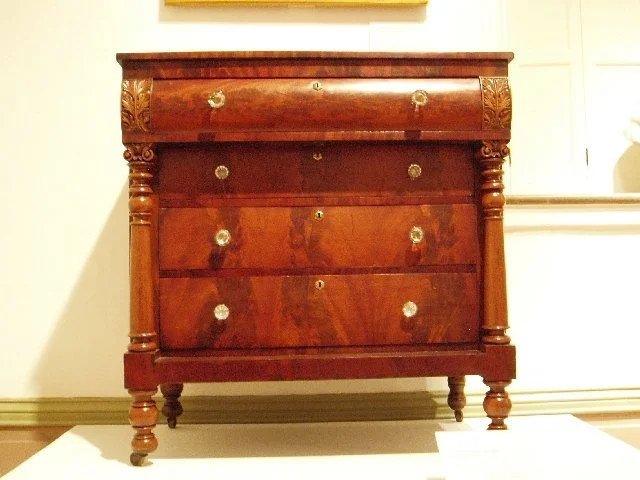
Somewhere in the warehouse of the Kentucky Historical Society there is a chest of drawers that, according to one Kentucky family, you really don't want to put your clothes in.
Over the course of more than 100 years, this chest has supposedly been connected to 16 deaths and at least two injuries. Babies died, people were killed in accidents, one man fell 30 feet through a railroad trestle, and another supposedly died because someone put his clothes in the chest.
And the weird part is, this isn't just some random haunted dresser that showed up in an antique store with a creepy story attached to it. The chest stayed within the same extended family for generations, and eventually one member of that family became so convinced that it was cursed that she tried to have the curse removed.
But before we get to that, we need to go back to where this whole thing supposedly started.
Around 1830 in Meade County, Kentucky, and a man named Jeremiah Graham is getting ready for the birth of his first child.
According to the family legend, Jeremiah had an enslaved man named Remus make a chest of drawers for the baby's clothes. Remus finished the chest, but apparently Jeremiah wasn’t happy with it. The story says he was so angry with the finished chest that he beat Remus, who later died from his injuries.
Despite apparently hating this thing enough to beat the man who made it, Jeremiah still brought the chest into the house and used it to store the baby's clothes. Sadly, the baby passed away as an infant.
Now obviously, infant death in the 1830s was sadly not unusual, and if this was the only death connected to the chest, we probably wouldn't be talking about it almost 200 years later.
But according to the Graham family story, this was just the beginning.
Jeremiah had a twin brother named Jonathan, and when Jonathan had a son, his clothes were also stored in the chest. He lived a lot longer than Jeremiah's baby, but on his 21st birthday, he was reportedly stabbed and killed by a servant.
At this point, Jeremiah and Jonathan's sister Amanda apparently decided that maybe they should stop using the chest and put it in the attic.
Which seems reasonable. And for a while, that's where it stayed.
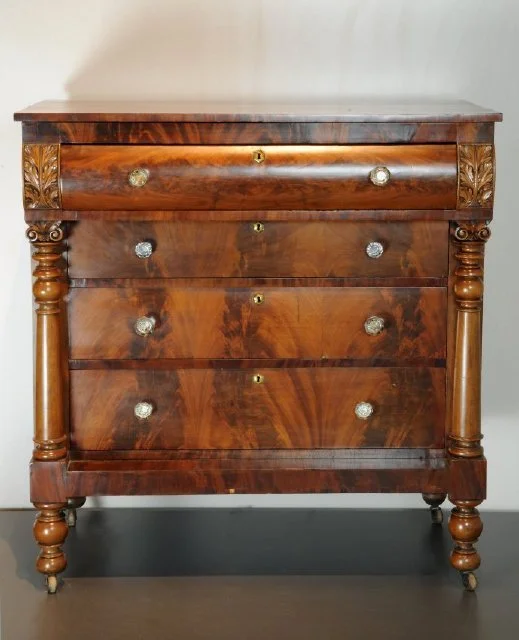
Some years later, a man named John Ryan and his wife Catherine were living on the Graham property and they were given the chest from the attic.
This is where the family history starts getting a little messy, and we're going to come back to that later, because trying to follow this chest through almost 150 years of marriages, children and grandchildren is not as straightforward as the legend makes it sound.
But according to the story, John and Catherine both used the chest for their clothing.
Catherine became sick, and farm life wasn't exactly bringing in a lot of money, so John traveled to New Orleans looking for work. While he was there, he was killed in an accident.
Not long after, Catherine died from her illness. And somehow, the chest survived both of them.
Eventually it made its way into the Gregory side of the family, and this is where the list of tragedies associated with it starts getting really long.
Eliza Ryan married John Gregory in 1866, and they had seven children. One of their daughters, Louisa, was disabled and died in 1883 when she was only 10 years old.
Another one of their children, Ernest, grew up and married a woman named Stella. Before their wedding in October 1895, Stella stored her wedding clothes in the chest.
For a while, everything was fine. But within two years of the wedding, Stella was dead.
Around this same period, a relative named Mabel came to live with the Gregory family. She eventually married a man named Wilbur and the two had a baby boy. The baby's clothes went into the chest. He died at two weeks old.
Then a few years later, Wilbur's clothes were put into it. He died in 1905.
Now if you're thinking that at some point somebody in this family should have just stopped putting clothes in the death dresser, I agree. But they didn't.
And one of the strangest stories connected to it happened a few years later.
John Gregory had a nephew named Emmett who worked on the railroad. Around Christmas, Emmett's mother knitted him a pair of gloves and a scarf as a present. Obviously, she needed somewhere to hide them until Christmas, so she put them in the chest.
In December of 1909, Emmett got off a train and fell about 30 feet through a trestle. He died from the fall.
And it wasn't just death that the family started associating with the chest.
John and Eliza had a daughter named Nellie who was getting ready to marry a man named Fred. Before their wedding, Nellie stored her wedding clothes in the chest. They got married, but Fred deserted her not long afterward.
So apparently the chest didn't necessarily have to kill you. Ruining your marriage was also an option.
Then John Gregory died in 1908. After his death, Eliza rearranged the house and moved the chest into her own bedroom. She died in April of 1914 at the age of 66.
And unlike some of the earlier deaths in this story, we actually have a reported cause of death for Eliza. Her death certificate lists inflammation of the stomach and bowels and congestion of the stomach.
But the chest still wasn't done moving through the family.
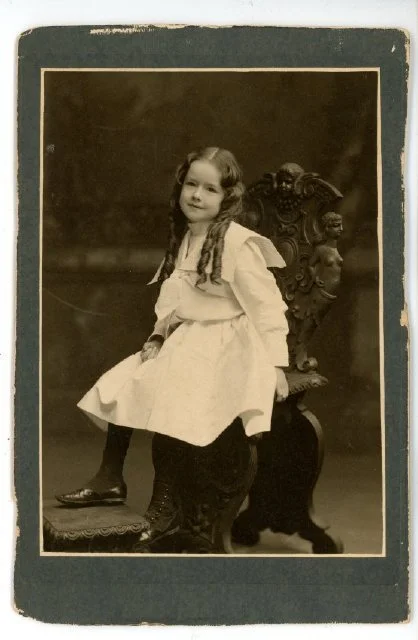
Virginia Cary Hudson
Eventually it came into the possession of John and Eliza's granddaughter, Virginia Cary Hudson Cleveland, and this is where the story gets especially interesting because Virginia becomes one of the most important people in the history of the chest.
Virginia and her husband Kirtley moved to Louisville, Kentucky, and when Virginia became pregnant with their first child, they stored the baby's clothes in the chest. The baby was born prematurely in 1915.
Virginia and Kirtley went on to have other children, including a daughter who was also named Virginia. And yes, we're at the point in the family tree where everybody's names start repeating.
Their daughter Virginia married a man named Wilbur in February of 1943. In December of the following year, Wilbur went to the hospital for an appendectomy. He died in the hospital from an overdose of ether.
Then there was Sonny. Sonny wasn't even part of the family. He was a neighbor who apparently used the chest to store his hunting clothes. In April of 1946, he was killed in a gun accident at another neighbor's house.
Virginia and Kirtley also had a son named Richard, who put some of his clothes into the chest. Less than a week later, Richard was stabbed through the hand at school.
He survived, but by this point the chest had supposedly been connected to deaths, accidents, a failed marriage and now an injury. And Virginia believed there was a reason for it.
Remember Remus, the enslaved man who supposedly made the chest back in 1830? According to the legend, after Jeremiah Graham beat Remus to death, the other enslaved people on the property wanted revenge. They supposedly cursed the chest that Remus had made, using owl blood that was dripped into the drawers.
And if that sounds oddly specific, don't worry, because the way they supposedly removed the curse gets even more specific. Virginia believed the curse was real, so she went to a woman named Sallie who worked for her and asked if there was a way to break it. Sallie told her there was. First, Virginia needed a dead owl, but there was a catch. She couldn't ask for one. A friend had to bring it to her without being asked. Then she needed leaves from a willow tree that had been planted by a friend. She was supposed to boil those leaves for an entire day within sight of the dead owl. After that, the liquid had to be poured into a jug and buried beneath a flowering bush with the handle of the jug facing east.
And apparently this wasn't the kind of ritual where you just waited to see if people stopped dying. There was supposed to be a sign that it worked. Either Virginia or Sallie would die before all of the leaves fell from the bush that fall. Sallie died in 1946. According to the family legend, the curse was broken.
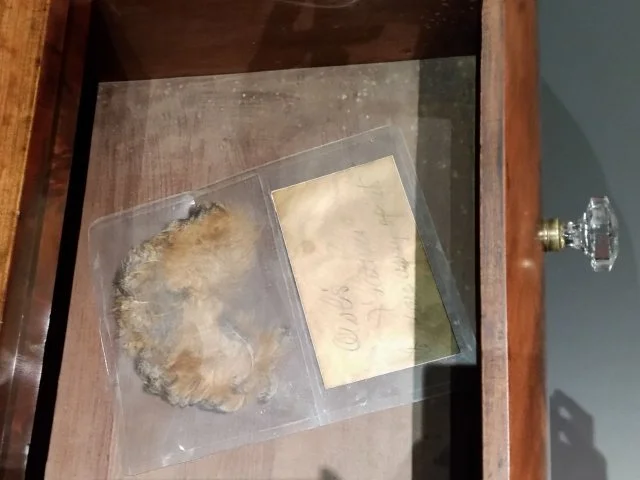
And eventually the chest left the family. In 1976, Virginia Cary Hudson Mayne donated it to the Kentucky Historical Society, where it remains today. And there are still owl feathers kept inside the top drawers. Just in case.
Okay. So that's the story of the cursed chest.
Now we have a problem. Actually, we have quite a few problems.
The Kentucky Historical Society itself warns people not to take the entire story as established history. On its own website, it says the story should be considered folklore and that while some of the names and dates can be verified, other parts may be incorrect, embellished or impossible to confirm.
And I get it. We're talking about a supposedly cursed chest. Obviously I'm not expecting to find a death certificate that says "killed by haunted furniture."
That's not the problem. The problem is that I wanted to know if the people were real. So I went through Ancestry and started building the family tree myself, focusing specifically on the people who supposedly owned or used the chest. And it got confusing pretty quickly.
Names change between different versions of the story. Fathers and sons seem to get mixed up. Relationships don't always line up the way they're supposed to. And some of the people I was looking for just didn't seem to exist.

Family Tree for the chest researched and made by Faerellia
That doesn't mean that none of this happened.
We're talking about a family story that supposedly begins around 1830. Stories get passed from parents to children, children grow up and tell their own children, names get forgotten, dates get mixed up and details get added or lost. After almost 200 years, I would actually be more surprised if every single detail was perfect.
But there's something else about this story that I think is important.
Virginia Cary Hudson Cleveland, the woman who eventually tried to have the curse removed, was also a writer. One of her books, Flapdoodle, Trust & Obey, included this same basic narrative about the chest, but the names and some dates were different. Then, in 2017, Virginia's daughter Beverly published The Conjured Chest: A Cursed Family in Old Kentucky, which gave names to the people supposedly connected to the deaths and explained their relationships to Virginia and the rest of the family.
And that leaves me with a question that I haven't been able to completely answer. How much of the story we tell about this chest today was actually being told by the Graham family in the 1800s?
We know the chest is real.
At least some of the people connected to it were real.
Some of the dates and deaths can be verified.
And clearly the family believed the story enough that it continued to be passed down for generations. The first account we know of the story being passed down was from Eliza to her grand daughter Virginia.
But somewhere between a chest supposedly made by an enslaved man around 1830 and the detailed family legend we have today, there are gaps.
Maybe those gaps are just what happens when a story survives for almost two centuries. Maybe tragedies that had nothing to do with one another slowly became connected because the family had this chest and already believed something was wrong with it.
Or maybe there really was something about this particular piece of furniture that made generation after generation of the same family afraid of it. I don't know.
But I do know that if somebody tells me a dresser has already been connected to 16 deaths, I'm probably finding somewhere else to put my clothes.