
Bayer’s Dark History: The Human Experiments Behind a Familiar Name
Bayer is a name most of us associate with something incredibly ordinary: aspirin. The company has existed for more than 160 years, and its famous name can still be found on pharmacy shelves around the world. But during World War II, Bayer was part of the massive German chemical conglomerate IG Farben, and people associated with its pharmaceutical operations participated in medical experiments on concentration-camp prisoners.
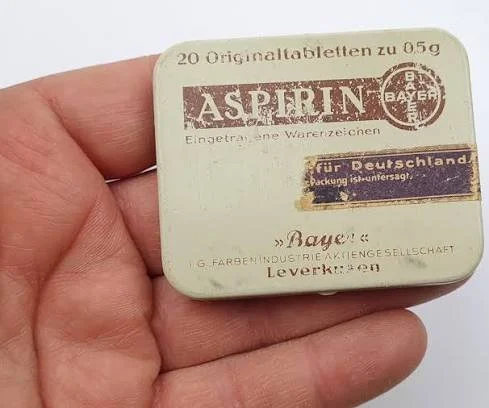
At Auschwitz, SS physicians including Helmuth Vetter, who was also a Bayer employee, tested experimental pharmaceuticals on prisoners. According to the Auschwitz-Birkenau State Museum, these experiments were carried out from 1941 to 1944 on behalf of IG Farben and, in particular, its Bayer division. Prisoners suffering from contagious diseases including typhus, tuberculosis and diphtheria were forced to take experimental drugs identified by names such as B-1012, B-1034, B-1036, 3582, Rutenol and Periston.
Some prisoners were already sick. Others involved in Nazi medical research were deliberately infected with disease. Either way, this wasn't anything resembling voluntary medical research. The people being used as test subjects were prisoners who could not consent and had no meaningful ability to refuse.
And the effects of some of the drugs were horrific.
Survivor accounts and historical records describe prisoners suffering severe circulatory problems, vomiting blood and painful bloody diarrhea after receiving the experimental preparations. Many of the prisoners subjected to these experiments died, and Auschwitz historians note that SS physicians sometimes subsequently ordered experimental subjects killed to conceal what had been done to them.
The Story of the 150 Women
One particularly disturbing story associated with Bayer involves 150 female prisoners at Auschwitz.
According to testimony introduced after the war, correspondence described negotiations to obtain approximately 150 women for experiments involving a new drug. The camp reportedly wanted 200 Reichsmarks for each prisoner, while the buyer offered 170. The testimony then described the women being delivered, the experiments taking place and all of the subjects dying, followed by a request for another group.
It's a horrifying story, and versions of it have been repeated in books and historical accounts for decades.
There's also an important complication.
In 2019, researchers investigated the surviving archives of Auschwitz, Bayer and the former Soviet Union specifically looking for evidence confirming this particular transaction and experiment. They couldn't authenticate it. Their conclusion wasn't that Bayer and IG Farben hadn't participated in unethical experiments—the historical evidence for pharmaceutical experimentation on concentration-camp prisoners is substantial. Rather, they found that the specific story of Bayer purchasing 150 women for an anesthetic experiment in which all 150 died could not be independently verified from surviving records.
That's an important distinction, especially with a story this serious.
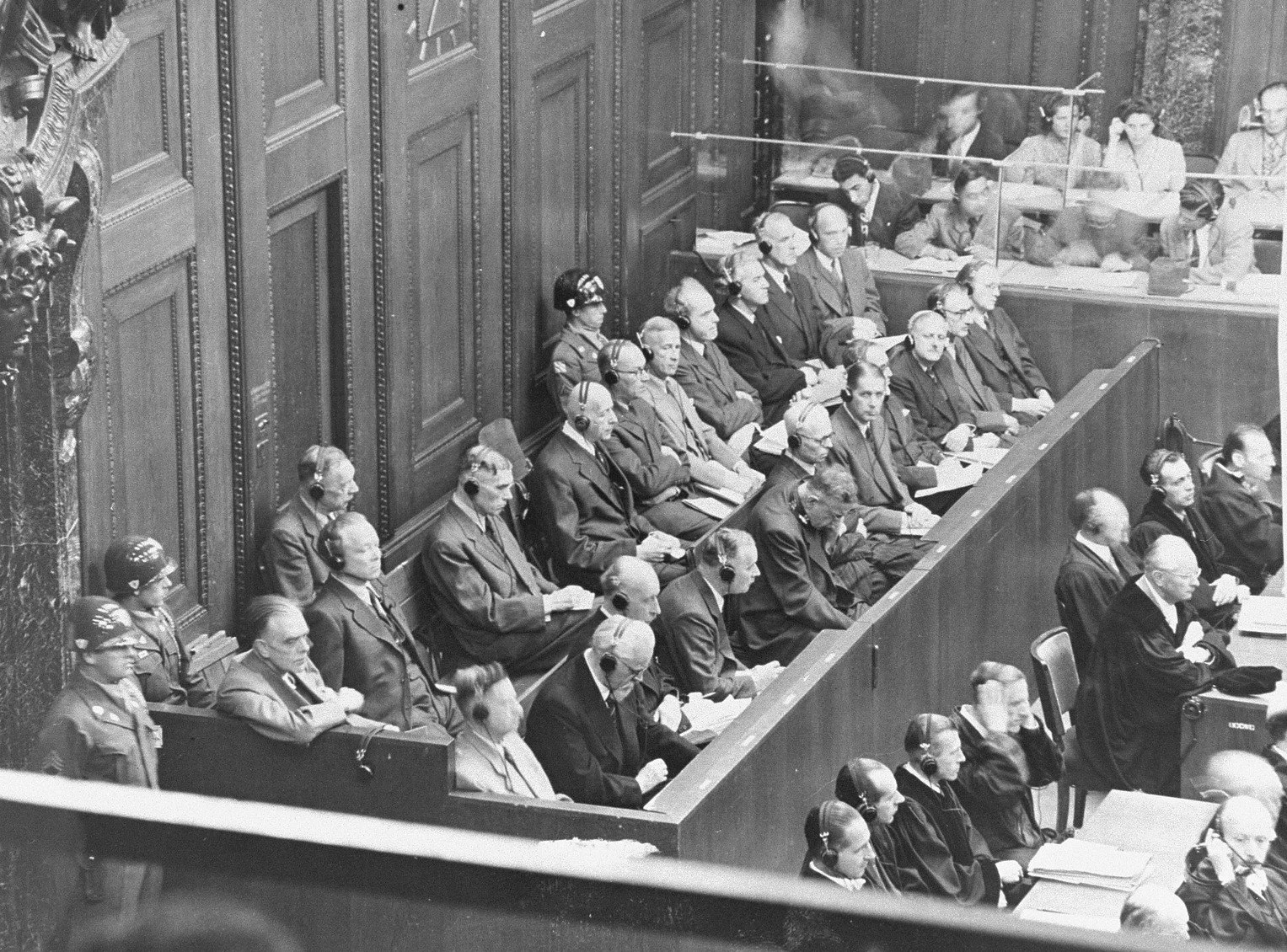
IG Farben Defendants
Bayer Was Part of IG Farben
There's another piece of context that gets lost when this history is reduced to the surprising statement that "the company that makes aspirin experimented on people."
During this period, Bayer wasn't operating as the independent company we recognize today. In 1925, Bayer had become part of IG Farben, an enormous conglomerate formed by several German chemical and pharmaceutical companies.
IG Farben would become deeply entangled with the Nazi regime. It built a massive industrial complex at Monowitz, also known as Auschwitz III, and exploited concentration-camp prisoners as forced labor. The pharmaceutical experiments carried out for IG Farben and Bayer were therefore one part of a much larger relationship between the corporation and the concentration-camp system.
After the war, IG Farben executives were prosecuted at Nuremberg, and the conglomerate was eventually broken apart. Bayer subsequently re-emerged as an independent company.
Which is how a name associated with one of the darkest chapters in the history of medical experimentation can also be a name you recognize from a bottle sitting in your medicine cabinet.
The Part Worth Remembering
The most shocking part of this story isn't really that Bayer still exists.
Companies can change ownership, leadership and structure dramatically over generations, and today's Bayer isn't simply the same organization operating exactly as it did under IG Farben during Nazi Germany.
What makes the history worth remembering is how ordinary the name has become.
We tend to imagine the organizations connected to atrocities as institutions that disappeared along with the regimes responsible for them. History is considerably messier than that. Some companies dissolved. Others were reorganized, renamed or broken apart. And some familiar brands have histories extending through periods that look completely different from the companies we know today.
Bayer's involvement in pharmaceutical experimentation on concentration-camp prisoners isn't an urban legend or an internet conspiracy. It's part of the documented history of IG Farben, Nazi Germany and Auschwitz.
The specific story about 150 women being purchased and killed in an anesthetic experiment deserves more caution because historians have been unable to independently authenticate the surviving testimony behind it. But the broader story doesn't depend upon that allegation. Prisoners at Auschwitz were used to test pharmaceutical preparations on behalf of IG Farben and Bayer, sometimes with devastating and fatal consequences.
And decades later, the Bayer name is still sitting on pharmacy shelves.
You just probably weren't thinking about Auschwitz the last time you reached for the aspirin.