
In the 1970s and 1980s, kids growing up on Staten Island told stories about a man named Cropsey. Depending on who was telling the story, Cropsey might have been an escaped mental patient, a former employee of a nearby institution or simply a deranged man who lived somewhere in the woods. He would supposedly sneak out at night, searching for children who wandered into the wrong place.
Like most urban legends, the details changed from one group of kids to another. But there was one location that fit the story particularly well: the abandoned buildings and wooded grounds surrounding the former Willowbrook State School.
Willowbrook had once housed thousands of children and adults with intellectual and developmental disabilities. By the time it closed in 1987, the institution had become notorious for overcrowding, neglect and horrific living conditions. Its abandoned buildings, underground tunnels and acres of surrounding woods provided exactly the kind of setting where a legend like Cropsey could thrive.
But then children on Staten Island really did begin disappearing.
And suddenly the story about the dangerous man hiding in the woods didn't seem quite so imaginary.
The Children Who Disappeared
Several children and young people disappeared from Staten Island during the 1970s and 1980s. Their cases weren't necessarily connected, but as the number of disappearances grew, fear spread through the community.
One of those children was 12-year-old Jennifer Schweiger. Jennifer, who had Down syndrome, disappeared on July 9, 1987. A massive search followed, with police, volunteers and members of the community looking through the wooded areas surrounding the former Willowbrook property.
More than a month later, Jennifer's body was discovered in a shallow grave near the abandoned school. By then, investigators had already begun focusing their attention on a man named Andre Rand.
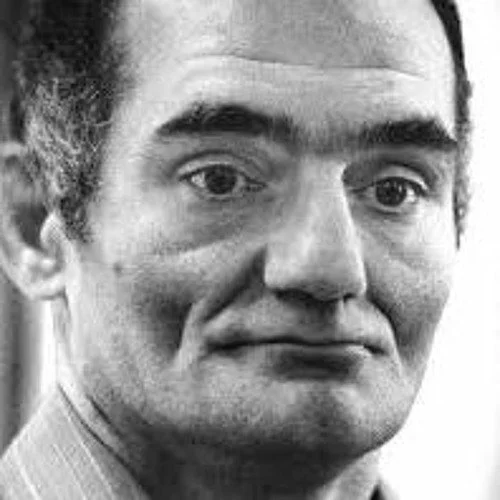
Andre Rand
Rand had previously worked at Willowbrook, and by the time Jennifer disappeared, he was known to spend time around the abandoned property. He lived an extremely transient life, sometimes sleeping outdoors and moving through the wooded areas and abandoned buildings that had already become associated with the Cropsey legend.
To frightened Staten Island residents, Rand seemed disturbingly similar to the monster they had been hearing about for years.
Except Rand was real.
Investigators connected him to Jennifer's disappearance, and he was eventually convicted of kidnapping her. Although he was not convicted of her murder, the discovery of her body near the place where Rand had been staying made his name inseparable from the case.
But Jennifer wasn't the only missing child whose disappearance became associated with him.
Was There More Than One Victim?
Rand was investigated in connection with several other disappearances from Staten Island, including children and young people who had vanished years before Jennifer.
That distinction is important. Being suspected in a disappearance isn't the same thing as being convicted of causing it, and some of the cases that have become attached to Rand over the years remain unresolved.
One case, however, did eventually lead to another conviction.
Years after Jennifer's death, prosecutors charged Rand with kidnapping 7-year-old Holly Ann Hughes, who had disappeared from Staten Island in 1981. Holly's body was never found, but Rand was convicted of her kidnapping in 2004.
The conviction strengthened the suspicion that Jennifer Schweiger had not been his only victim, but it still didn't answer what happened to the other missing children whose names had become connected to the story.
And that uncertainty is part of what has kept the Cropsey legend alive.
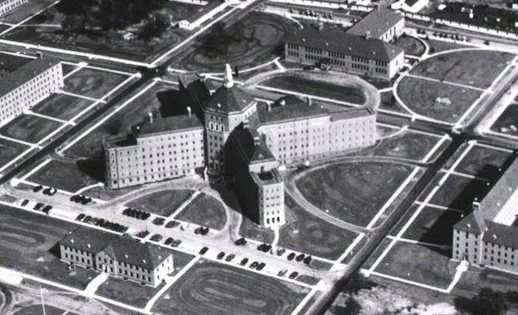
The Real History of Willowbrook
The setting also makes this story considerably darker.
Willowbrook State School wasn't frightening because it was abandoned or because people claimed its tunnels were haunted. The documented history of what happened there was disturbing enough on its own.
The institution became severely overcrowded, and residents were subjected to conditions that eventually became a national scandal. In 1972, television journalist Geraldo Rivera exposed conditions inside Willowbrook to a much wider audience, showing residents living in overcrowded and unsanitary conditions with inadequate care.
Long before Cropsey became associated with Willowbrook, the property already carried a very real history of suffering.
After Willowbrook closed, many of its buildings remained abandoned. Nature began reclaiming parts of the property, and stories spread about what might be hiding inside the buildings, tunnels and surrounding woods.
For Staten Island kids already telling stories about Cropsey, it was almost the perfect setting.
Then Andre Rand appeared.
Did Cropsey Actually Become Real?
Not exactly.
Cropsey existed as a campfire and neighborhood legend before Rand became publicly associated with the disappearances. There wasn't necessarily one definitive Cropsey story, and the character wasn't originally a description of Andre Rand.
But that's what makes this case so unsettling.
Kids had already created a monster who supposedly lived in the woods, lurking around an abandoned institution and waiting for children. Then a real man who spent time around those same woods was convicted of kidnapping two children, one of whom was found dead nearby while the other was never found.
The similarities allowed the real crimes and the older urban legend to blend together.
Eventually, it became difficult to talk about one without talking about the other.
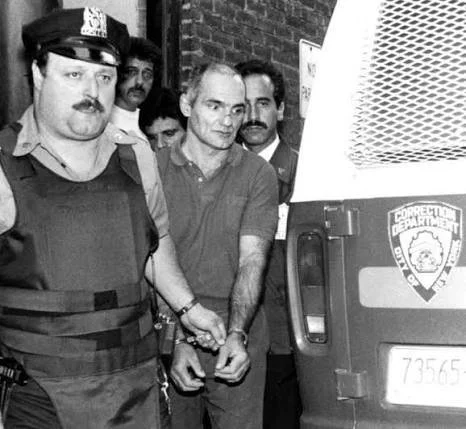
The Monster in the Woods
There's a temptation with stories like Cropsey to say that the urban legend somehow predicted what was going to happen. But there's another possibility that's arguably more interesting.
Urban legends usually grow from things people are already afraid of.
An abandoned institution with a disturbing history stood surrounded by woods on Staten Island. Children were warned about wandering into dangerous places. Stories circulated about frightening people who might be living around the property. Then children actually disappeared, and investigators found a real person who seemed to fit the monster everyone had already imagined.
Cropsey didn't step out of a campfire story and become Andre Rand.
Instead, reality became frighteningly similar to the legend.
And sometimes that's considerably more disturbing than finding out the monster was real all along.