
Why Is Friday the 13th Considered Unlucky?
Friday the 13th has become so closely associated with bad luck that even people who don't consider themselves particularly superstitious tend to notice when it rolls around. Hotels sometimes skip the 13th floor, some people avoid making major plans on the date, and horror movies have certainly done their part to make the combination of Friday and the number 13 feel ominous.
But why?
One of the most popular explanations takes us back more than 700 years to the Knights Templar, a powerful order of warrior monks that had accumulated considerable wealth and influence during the Crusades.
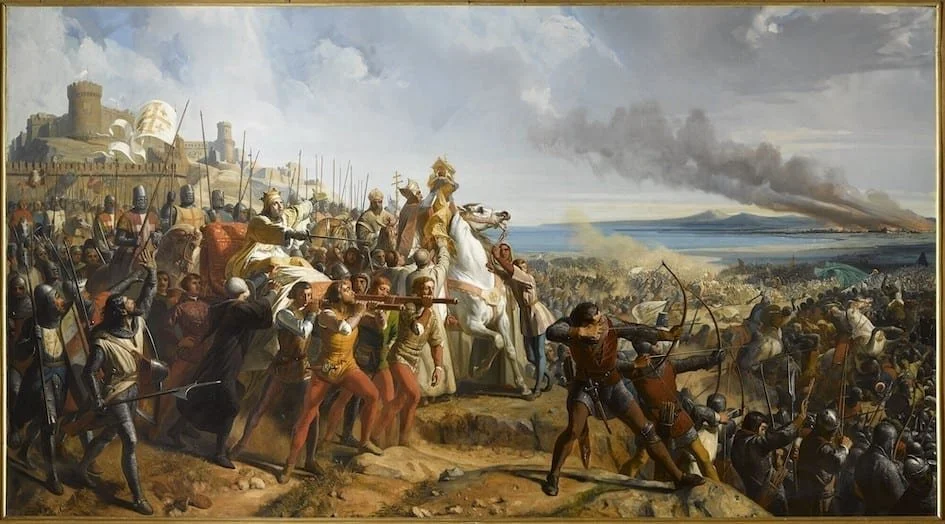
On Friday, October 13, 1307, King Philip IV of France ordered the mass arrest of Templars throughout his kingdom. The men were accused of heresy and other crimes, many were tortured, and some were eventually executed. The order itself was formally dissolved several years later.
It's a wonderfully dark explanation for Friday the 13th: thousands of knights betrayed and arrested on one specific Friday the 13th, forever cursing the date.
There's just one problem. There isn't much evidence that people immediately started treating Friday the 13th as unlucky because of what happened to the Templars. That connection appears to have become popular much later.
The real history of Friday the 13th is considerably messier.
Friday Was Already a Problem
Long before anyone was worried about Friday specifically falling on the 13th, Friday itself had developed an unlucky reputation in parts of Western culture. Christian tradition probably contributed to that reputation. Jesus was traditionally believed to have been crucified on a Friday, and over time other biblical events were sometimes associated with the day as well. Whether all of those later associations had any historical basis wasn't particularly important to the superstition. Friday gradually became a day on which some people believed it was unwise to begin something important.
Sailors were famously said to be reluctant to begin voyages on Fridays. Starting a new venture, getting married or making an important journey could also be considered tempting fate. But Friday was only half of the problem.
The number 13 had baggage of its own.
What's Wrong With 13?
Twelve is an unusually satisfying number. There are 12 months in a year, 12 signs of the zodiac, 12 hours on a traditional clock face and 12 apostles in Christianity. Twelve shows up again and again as a number associated with completeness and order.
Then 13 comes along and ruins everything. Instead of completing the set, 13 goes one beyond it. That may be one reason the number eventually developed a reputation for being irregular or unlucky.
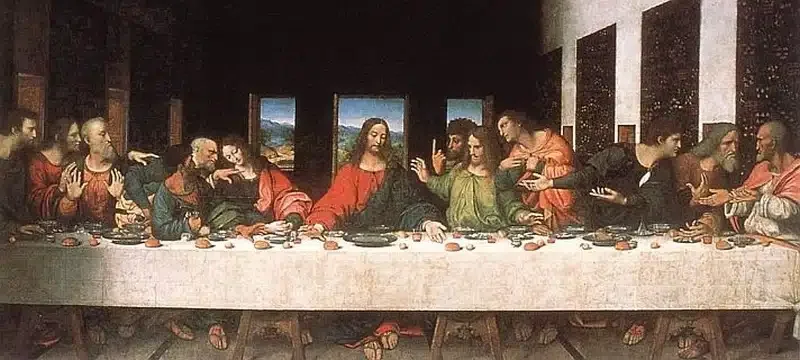
One of the best-known explanations comes from the Last Supper. Jesus dined with his 12 apostles, creating a group of 13 people at the table shortly before his crucifixion. Judas, the disciple who betrayed him, became closely associated with the idea of the unlucky 13th guest.
There's also a similar story in Norse mythology involving a banquet attended by 12 gods. Loki arrives uninvited as the 13th guest, and his presence ultimately leads to the death of the god Baldr.
Whether these stories actually created our fear of the number 13 or were later used to explain an existing superstition is difficult to untangle. That's often the problem with folklore. People are very good at coming up with explanations for traditions long after everyone has forgotten why they started.
Whatever its exact origin, by the modern era 13 had clearly earned itself a bad reputation. Put an unlucky day together with an unlucky number, and eventually you get Friday the 13th.
So When Did Friday the 13th Become a Thing?
This is where the history gets interesting. Despite all of the ancient stories that are now used to explain the superstition, widespread fear of Friday the 13th as a specific date appears to be much more recent.
References to Friday and 13 being unlucky existed separately for a long time, but the combination became increasingly recognizable during the 19th and early 20th centuries. By then, newspapers and popular culture were helping turn Friday the 13th into the ominous date we recognize today.
And once people expect something bad to happen on a particular day, it's remarkably easy to find evidence that they're right. A car won't start. You spill coffee on yourself. You trip walking into work. An unexpected bill arrives.
On Thursday the 12th, those things are annoying. On Friday the 13th? Of course they happened. It's Friday the 13th.
What About the Knights Templar?
That brings us back to the Knights Templar. Their arrests really did begin on Friday, October 13, 1307, which is an incredible coincidence considering the date's modern reputation. But the idea that this event created the Friday the 13th superstition doesn't have a particularly strong historical foundation.
That doesn't make the story any less interesting. If anything, it's a good example of the way folklore evolves. We have an actual historical event that occurred on a date we now consider unlucky. Centuries later, the two became connected, giving us an origin story that sounds so perfect that it gets repeated over and over.
And that's exactly how legends tend to stick.
Flight 666 to HEL
Modern life has given Friday the 13th some strange coincidences of its own. One of my favorites is Finnair Flight 666.
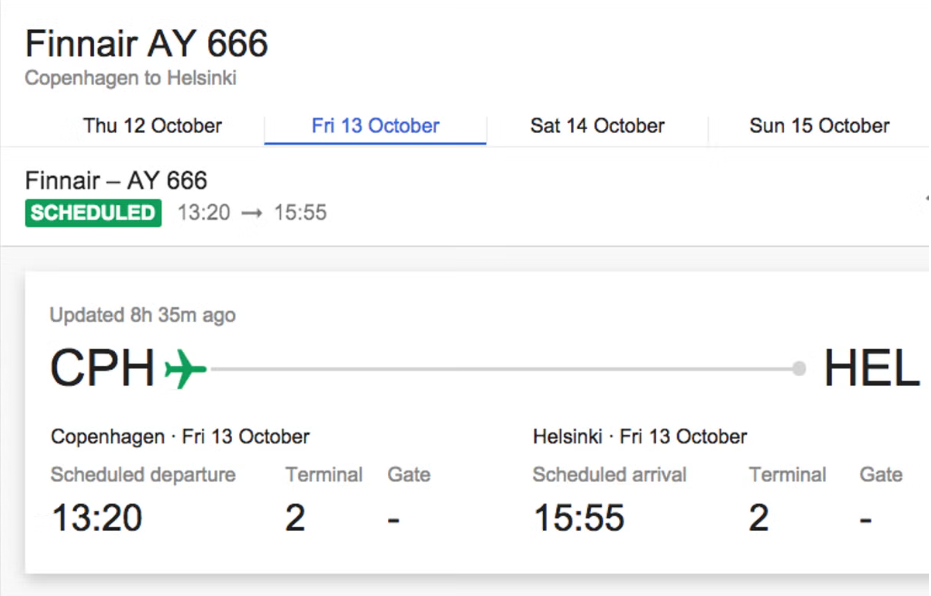
For years, Finnair operated Flight AY666 between Copenhagen and Helsinki. Helsinki's airport code happens to be HEL, which meant passengers could quite literally board Flight 666 to HEL. And yes, the flight operated on Friday the 13th.
In October 2017, Flight 666 departed Copenhagen on Friday the 13th and headed toward HEL. Despite having just about every ominous number and abbreviation you could possibly squeeze onto one airline ticket, the flight landed safely.
Coincidence? Almost certainly. But it still gives off major spooky vibes.
Finnair later retired the 666 flight number, taking away one of aviation's better accidental contributions to modern superstition.
Does More Bad Stuff Actually Happen on Friday the 13th?
This is where our brains become part of the story. Once you know Friday the 13th is supposed to be unlucky, you're more likely to notice things that support that belief. If something strange or unfortunate happens, the date suddenly seems significant. If nothing happens, you probably don't spend Saturday morning thinking about how uneventful your Friday the 13th was.
It's a form of confirmation bias. We notice and remember the things that fit the story we're already expecting. That doesn't stop people from taking the superstition seriously. Some avoid traveling, making major purchases, scheduling weddings or doing other important things on Friday the 13th. There's even a wonderfully ridiculous word associated with fear of the date: paraskevidekatriaphobia.
And then there are the ghost stories.
Over time, Friday the 13th has collected the same kinds of paranormal claims that surround other supposedly significant dates. People report strange noises, shadowy figures, unexplained accidents and other eerie experiences, with the date itself becoming part of the explanation. Maybe something unusual really happened. Or maybe when you're already expecting Friday the 13th to be creepy, every unexplained noise in the house suddenly sounds a little more interesting.
So Why Are We Still Afraid of It?
There probably isn't one moment in history when Friday the 13th suddenly became unlucky. That's what makes the story more interesting than the simple Knights Templar explanation. Friday already had centuries of religious and cultural baggage. Thirteen had developed its own collection of uncomfortable associations. Eventually, the two superstitions merged, and popular culture did the rest.
Then we added the Knights Templar, horror movies, ghost stories, bizarre coincidences and generations of people pointing out every terrible thing that happened to occur on the date. At this point, Friday the 13th almost doesn't need an origin story anymore. We've been telling ourselves that something is wrong with the date for so long that the superstition has become part of the culture.
Is Friday the 13th actually more dangerous than any other day? Probably not.
But if your lights flicker, your car refuses to start and you catch something moving out of the corner of your eye on Friday the 13th, knowing that probably isn't going to make the date feel any less creepy.