
The Lake Nyos Disaster: The Night a Lake Killed Nearly 1,700 People
The village of Nyos sits in the northwest corner of Cameroon, Africa. On the night of August 21, 1986, everyone in the village was asleep after a long day of chores and the last cooking fires had died down. But around 9:30 that night, there was a deep rumble that sounded like thunder.
There was no rain.
Joseph Nkwain was woken by the sound, but he didn't hear anything else, so he went back to sleep. It wasn't until he woke up later that he would realize what that sound really was.
Joseph
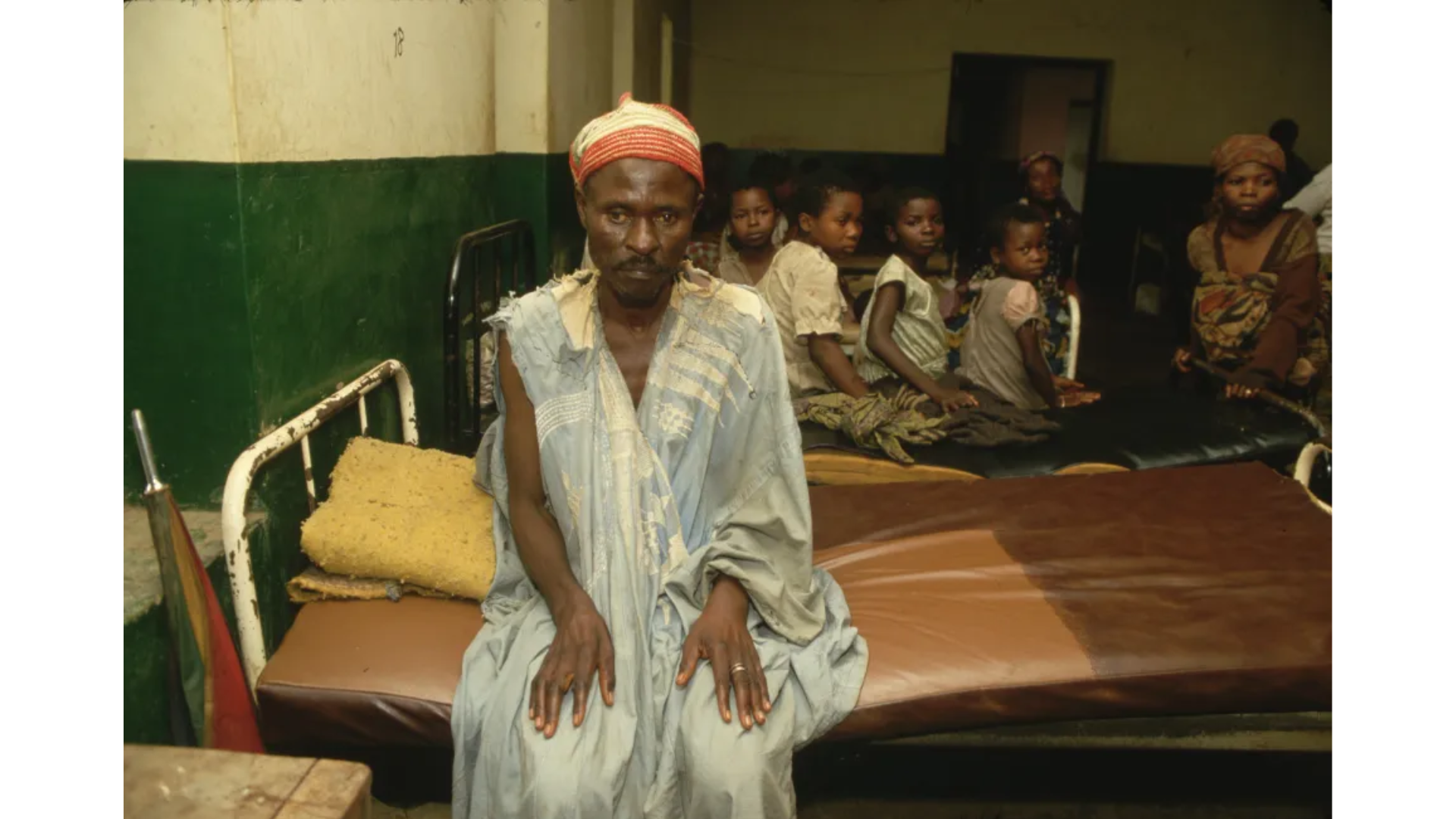
Joseph Nkwain was a farmer who spent his days tending his crops and checking on his small herd of goats. His life was routine. Work followed the seasons, and his time at home was spent with his wife and children.
On August 21, 1986, he was having dinner with his family while his 10-year-old daughter talked about the market in Wum, a town about 25 miles away. After dinner, the family went to bed and quickly fell asleep.
Around 9:30 p.m., a low rumbling noise, almost like distant thunder, came from Lake Nyos, a deep crater lake not far from the village. Joseph stirred in his sleep, his mind registering the sound but not yet alarmed. The noise faded, and he went back to sleep.
What he didn't realize was that a deadly force was awakening.
The Fog
A massive cloud came from the lake and rolled silently down the valleys toward Nyos and nearby villages. It hugged the ground, creeping into homes and quietly taking lives with terrifying efficiency.
Joseph woke sometime later with his body feeling heavy and his breathing shallow and labored. He tried to talk and call out to his wife, but his voice wasn't working. His pants were stained red, as if they had been splattered with something, and his arms had strange wounds—small, raw lesions he couldn't explain.
Confused, he stumbled toward his daughter's bed and tried to wake her, but he couldn't. Her body was curled up in bed, but she wasn't breathing. A cold dread washed over Joseph as he looked across the room and saw his wife and youngest child lying motionless as well.
He began to panic, but his body refused to cooperate. His legs felt like lead and his vision blurred. He managed to open the door, hoping the fresh air might help, but the village outside was eerily quiet. No dogs barked. No roosters crowed. The air carried a faint smell that Joseph described as something like gunpowder or rotten eggs, although his mind could barely process what was happening.
He staggered back inside and fell to the floor near his daughter's bed, where he slipped into unconsciousness. For hours, he lay in a coma while the world around him remained silent and still.
Alone
When Joseph woke again, it was late afternoon on Friday, August 22. The sun was low in the sky, casting long shadows across the village. His body ached, his throat was raw, and his mind struggled to piece together what had happened the night before.
He shakily stood and called out to his neighbors, but no one answered. When he stepped outside, he saw a scene that would haunt him for the rest of his life.
The village of Nyos had become a graveyard.
Bodies lay where people had fallen—near cooking areas, in doorways and along paths through the village. His neighbors, friends and extended family were gone. Even the normal sounds of insects were largely absent because so many of them had died in the same invisible catastrophe.
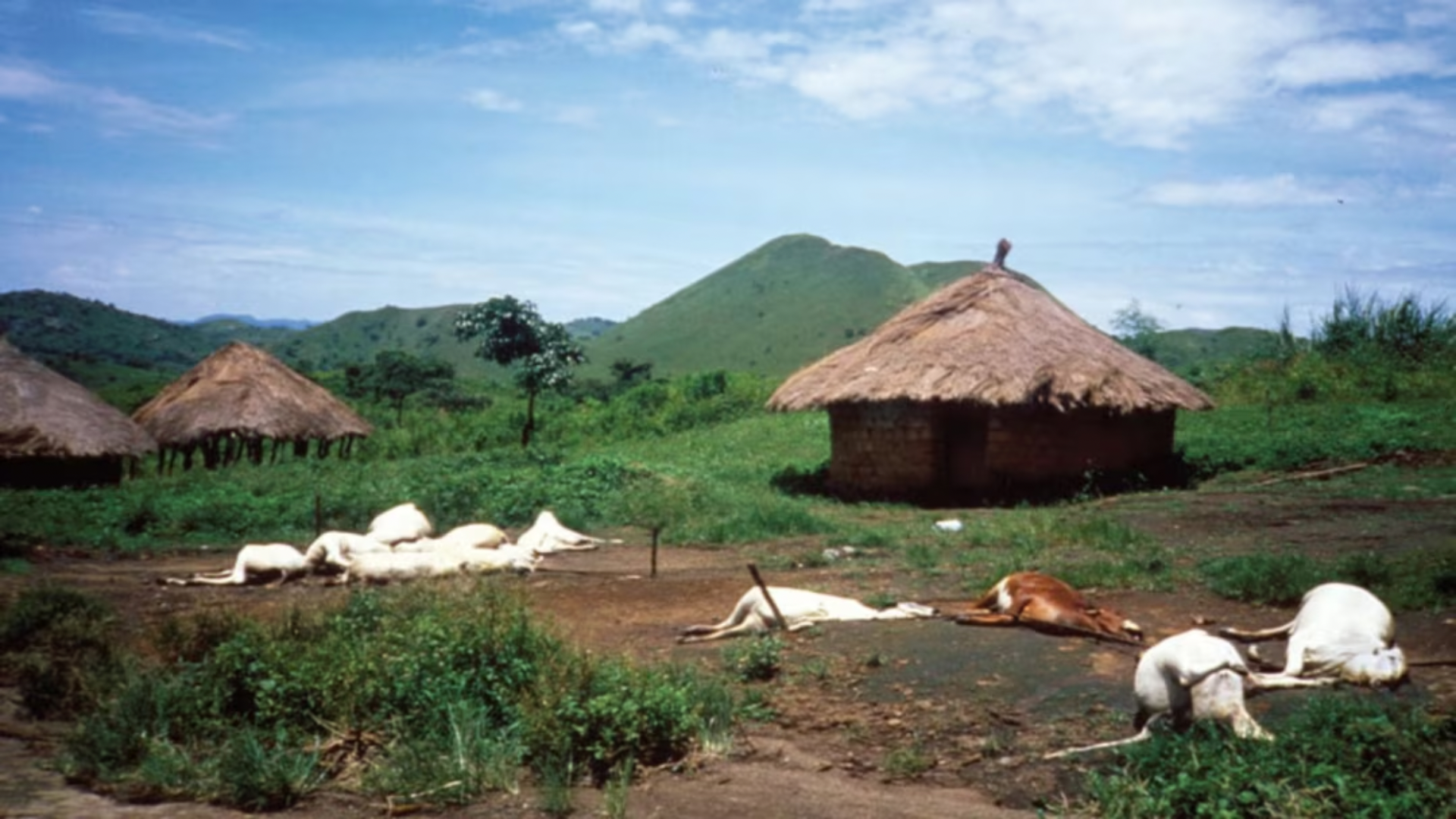
Joseph stumbled through the village trying to understand what he was seeing. There were children he had watched grow up, elders he had respected and friends lying dead on the ground. The animals were dead too. Goats and cattle lay in the fields, their bodies beginning to bloat beneath the sun.
The vibrant forest surrounding Nyos stood in stark contrast to the death throughout the village. Joseph couldn't fully grasp the scale of the loss. It must have felt as though the world had ended and somehow left him behind.
The Road to Wum
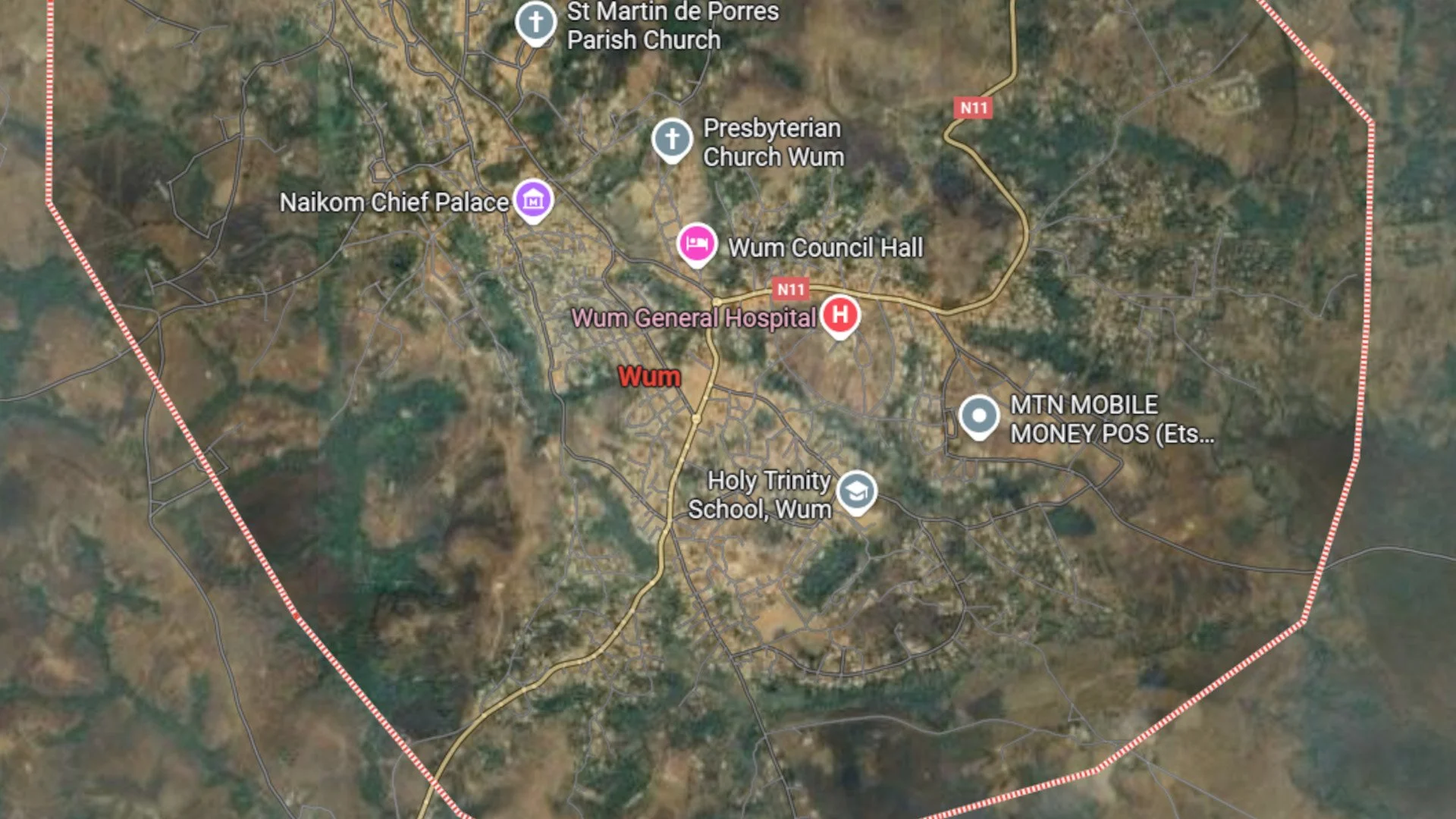
Driven by instinct and desperation, Joseph decided he couldn't stay. Most of his extended family lived in Wum, and he clung to the hope that at least some of them might be safe.
He got his motorcycle, its engine becoming one of the few sounds in the otherwise quiet village. A friend joined him, equally dazed and weak, and together they rode away from Nyos. Along the way, they continued passing scenes of devastation: empty homes, abandoned areas and bodies lying along their route.
The roughly 25-mile road to Wum must have felt endless. Joseph's body was still suffering from whatever had happened during the night, and he trembled with exhaustion. He could barely speak, his voice reduced to a rasp, while his arms and legs felt as though they might give out at any moment.
By the time they reached Wum, Joseph's condition had worsened to the point that he could no longer walk. He was taken to a hospital where medical workers were already dealing with survivors arriving from Nyos and the surrounding villages.
Doctors noticed many of the same symptoms among them: respiratory problems, severe weakness and unusual skin lesions. These symptoms were eventually associated with exposure to extremely high concentrations of carbon dioxide and the oxygen deprivation that followed.
Joseph's lesions, like those seen on other survivors, were initially thought to be burns. Later investigations suggested that the unusual skin injuries may instead have been associated with prolonged oxygen deprivation and the amount of time unconscious survivors spent immobilized.
Joseph lay in the hospital surrounded by other people who had lost almost everything, their faces marked by the same grief and confusion.
But what could possibly kill nearly an entire village overnight without destroying the buildings around them?
The answer was sitting in the lake.
The Science Behind What Happened
What happened at Lake Nyos is incredibly rare. Only a handful of lakes in the world have conditions capable of producing this kind of disaster, and the other famous deadly event occurred at Lake Monoun, also in Cameroon, in 1984. That event killed 37 people.
Two years later, Lake Nyos would kill nearly 1,700.
So what exactly happened?
First, we need to talk a little bit about geology.
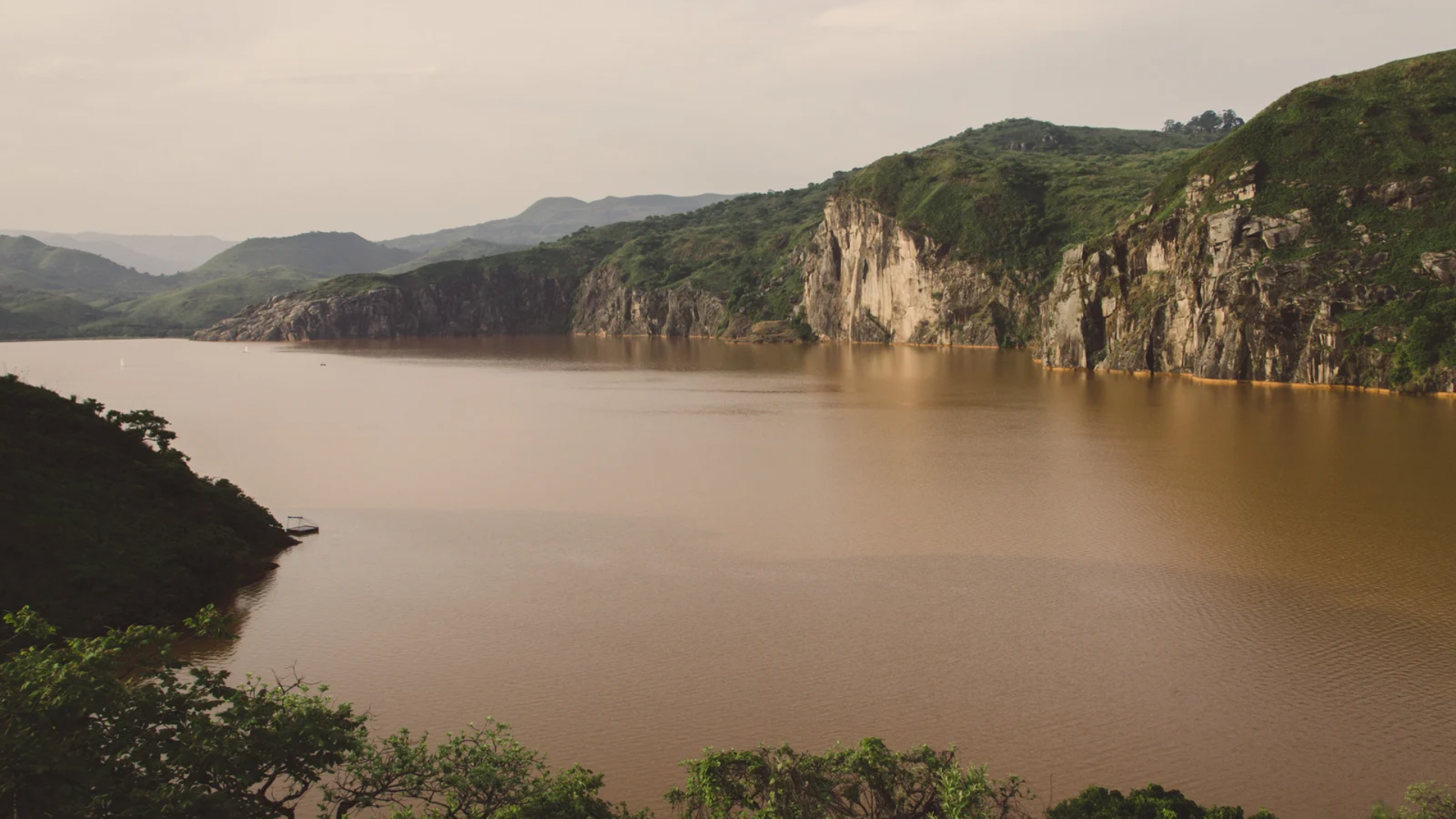
Lake Nyos occupies a volcanic crater in an area that has been volcanically active for millions of years. Deep beneath the region is magma, and carbon dioxide from below the Earth's surface can migrate upward through rock and groundwater until it reaches the bottom of the lake.
I think you can probably see where I'm going with this.
Deep lakes located in volcanically active areas can accumulate enormous amounts of dissolved carbon dioxide. It's the same gas we exhale every time we breathe, and under normal circumstances there's nothing particularly frightening about it. The problem at Lake Nyos wasn't simply that carbon dioxide existed. It was how much of it had accumulated and where it was being stored.
The volcanic system beneath the lake was the major source, but carbon dioxide enters bodies of water in other ways as well. CO2 in the atmosphere can dissolve into water when conditions allow it. Wind creating waves and ripples increases the amount of water exposed to the atmosphere, creating more opportunities for gas exchange.
Then there's all of the organic matter at the bottom of a lake. As plants and animals die and are broken down by microorganisms, that decomposition releases carbon dioxide. Some of that CO2 dissolves into the surrounding water, while in shallow water some can escape toward the surface as bubbles.
Groundwater and surface runoff can contribute as well. As groundwater moves through soil and runoff travels across the land, they can pick up carbon dioxide associated with decaying organic matter. When that water eventually reaches a lake, everything mixes together.
Those processes happen in bodies of water all over the world, though, and most lakes obviously don't suddenly suffocate everyone living nearby.
Lake Nyos had another important characteristic: it is extremely deep.
A Lake Under Pressure
Lake Nyos reaches a depth of roughly 682 feet. At those depths, the enormous weight of the water above creates high pressure, while the deep water remains relatively cold. The higher the pressure and the colder the water, the more carbon dioxide can remain dissolved in it.
At approximately 682 feet, you're dealing with somewhere around 296 psi of pressure. To put that into perspective, that's roughly equivalent to the pressure inside about 19 pressure cookers.
The differences in pressure and temperature between the upper and lower portions of the lake create layers, a condition known as stratification. Instead of the entire lake constantly mixing from top to bottom, the deeper water can remain separated from the water above it.
And that's important because the deeper layers were where all that carbon dioxide was accumulating.
As long as the lake remained stable, the gas could stay dissolved under pressure. For it to suddenly escape, something needed to disrupt the deeper water and bring that carbon-dioxide-rich water toward the surface.
A landslide has long been considered one possible trigger for what happened at Lake Nyos, although exactly what initiated the event has been debated. That deep rumble Joseph heard could have been associated with a landslide, the sudden movement of an enormous amount of water, or the eruption itself.
Whatever started it, once some of that deep water began moving upward, the situation became unstable very quickly.
Think about opening a bottle of soda.
While the bottle is sealed, carbon dioxide remains dissolved in the liquid because it's under pressure. Open the bottle and the pressure drops. Suddenly, bubbles begin forming and CO2 rushes out.
Something similar happened on an enormous scale at Lake Nyos.
As carbon-dioxide-rich water rose toward the surface, the pressure decreased and the gas began coming out of solution. That made the water more buoyant, causing it to rise even faster and release even more gas. The process essentially began feeding itself.
This is called a limnic eruption.
And once it started, Lake Nyos released an enormous amount of carbon dioxide in a very short period of time.
A Cloud You Couldn't Breathe
Carbon dioxide is heavier than the normal mixture of gases in our atmosphere, so instead of simply rising and immediately dispersing, the concentrated gas stayed close to the ground and followed the surrounding terrain downhill.
It moved out from the lake and through the valleys toward Nyos and other nearby communities.
Anything in its path that needed oxygen was in trouble.
When we inhale small amounts of carbon dioxide—which we do every day—nothing dramatic happens. But at higher concentrations, CO2 can cause headaches, dizziness, confusion and difficulty breathing. As concentrations continue increasing, the effects become much more severe.
For comparison, OSHA's permissible exposure limit for carbon dioxide in workplaces is 5,000 parts per million averaged over an eight-hour workday. Normal outdoor air is only a few hundred parts per million, although concentrations vary somewhat depending on location and nearby sources.
What came out of Lake Nyos wasn't remotely comparable to either of those situations.
The eruption released an enormous volume of concentrated carbon dioxide almost all at once. The gas flowed outward from the lake, displacing the breathable air around it as it traveled into populated areas.
For villagers who were already asleep, there may have been very little warning. Some might have noticed difficulty breathing or felt confused, but many likely lost consciousness before they understood that anything was wrong.
Once carbon dioxide reaches sufficiently high concentrations, the body can't simply compensate by breathing harder. Our lungs and blood regulate carbon dioxide constantly, but when the surrounding atmosphere contains extreme concentrations of CO2 and too little oxygen, that normal system begins to fail.
The saying "the dose makes the poison" comes to mind here.
Carbon dioxide is something our own bodies produce every second of every day. But at the concentrations experienced around Lake Nyos, it became deadly.
People lost consciousness. Their brains were deprived of oxygen. Many slipped into comas and never woke up.
And because the gas remained close to the ground, it wasn't only people who died. Livestock, wildlife, insects and other animals in the path of the cloud died as well.
That's why Joseph woke to such complete silence.
The Strange Skin Lesions
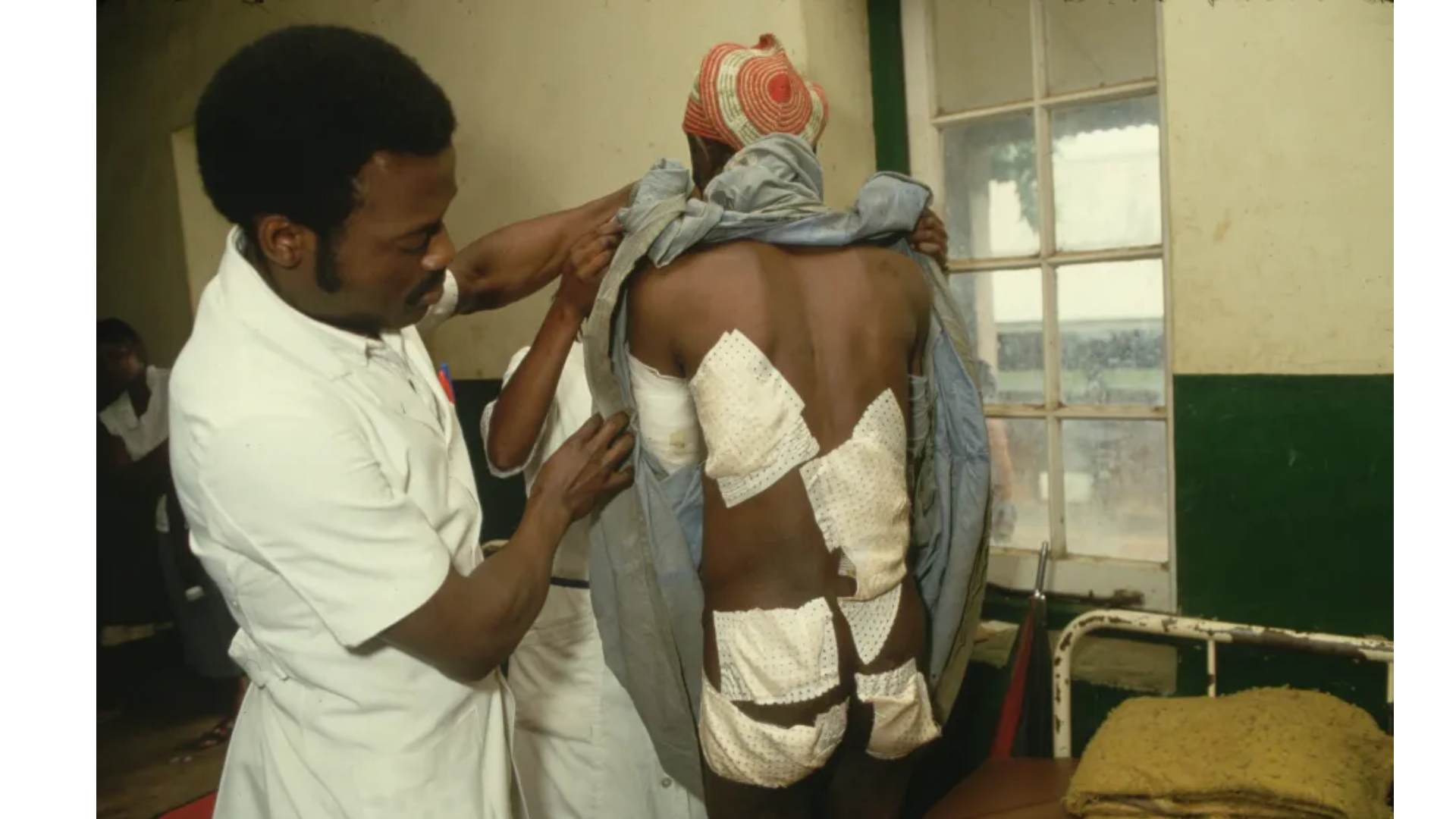
One of the stranger details reported after the Lake Nyos disaster was the appearance of skin lesions and blisters on some survivors.
Carbon dioxide in its gaseous form isn't normally associated with the kinds of burns you might expect from direct contact with dry ice, which is simply solid carbon dioxide. Yet survivors from the Lake Nyos area displayed unusual areas of reddened and blistered skin.
Early on, some of these injuries were mistaken for burns. Later research suggested that the lesions were more complicated and may have resulted from prolonged oxygen deprivation and pressure damage while victims remained unconscious for hours.
Joseph had been unconscious on the floor for much of the disaster. Other survivors had similarly collapsed and remained in the same positions for long periods before waking or being found.
So while the gas itself was invisible, survivors sometimes carried very visible evidence of what their bodies had gone through.
Making Sure It Doesn't Happen Again
The frightening thing about Lake Nyos was that the source of the disaster didn't disappear after the eruption.
Carbon dioxide continued entering the lake from below. Given enough time, it could theoretically accumulate again.
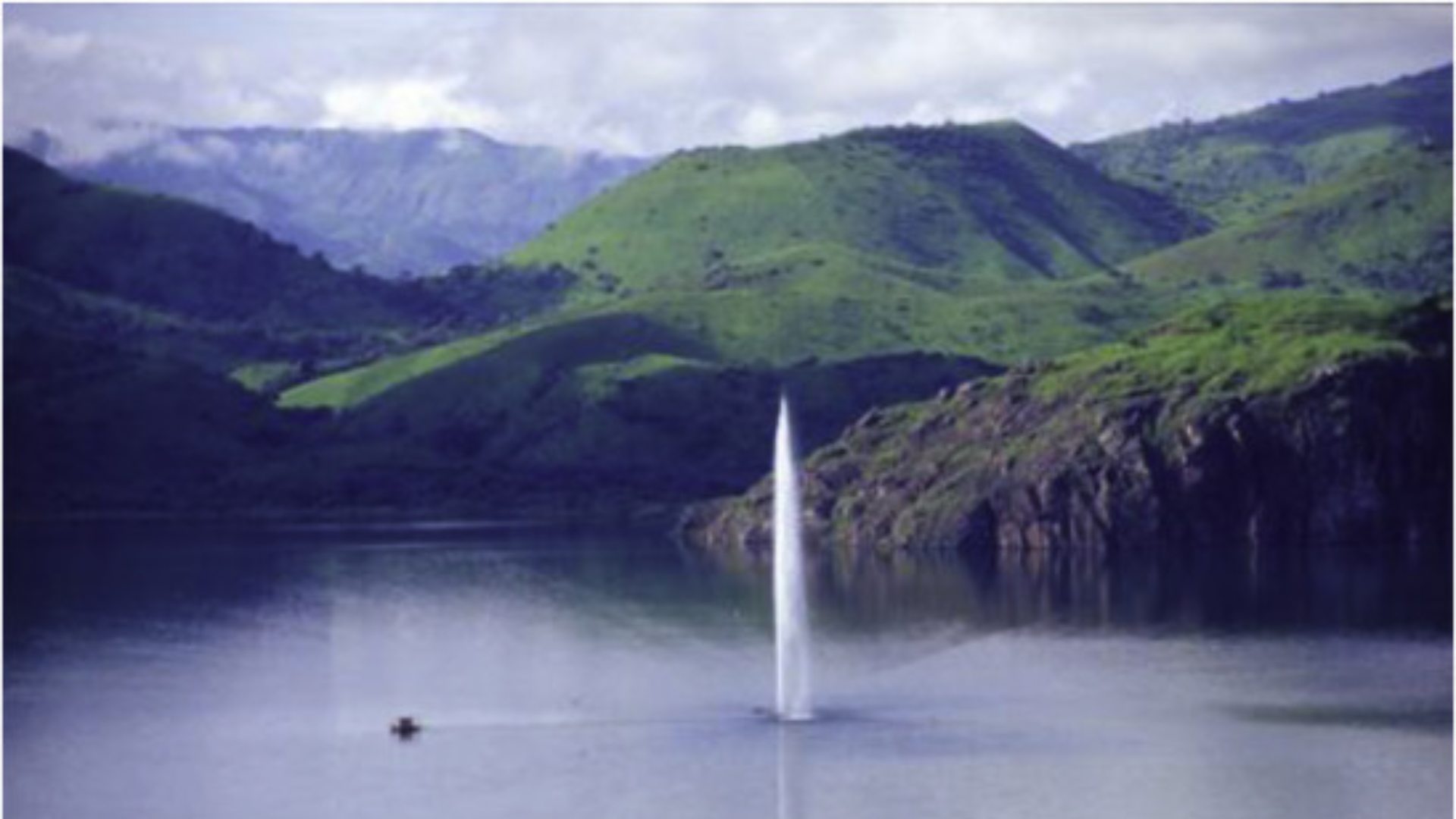
To prevent that, a degassing system was eventually installed in Lake Nyos. Pipes extend down into the carbon-dioxide-rich water in the deeper portions of the lake and allow that water to rise toward the surface in a controlled way. As the pressure decreases, the dissolved CO2 escapes gradually rather than being allowed to build toward another catastrophic release.
It's essentially a controlled version of the same process that caused the disaster, except instead of allowing an enormous amount of gas to escape all at once, the system continuously releases it in much smaller amounts.
What happened at Lake Nyos is one of those disasters that almost sounds impossible when you first hear about it. There was no lava flowing through the village. There wasn't a wall of water destroying homes. There wasn't a fire or an explosion that people could see coming.
A lake released an invisible gas.
It traveled silently through the valleys while people slept, pushing away the air they needed to breathe. By the time morning came, entire families were dead in their beds, livestock lay dead in the fields, and survivors like Joseph woke to villages that had gone almost completely silent.
The lake was still there. The houses were still standing. The trees were still green.
Almost everything that needed to breathe was gone.