
Herbal Muscle Relief Bath for Tired Legs and Sore Feet
After a long day on my feet, sometimes the best remedy is also the simplest: a hot bath and a handful of herbs.
This bath blend was inspired by one of those days when my legs felt heavy, my feet ached from standing, and I needed something that felt restorative without requiring much effort. The herbs in this recipe are some of my favorites that are known for their soothing aromas and traditional use in relaxing tired muscles.
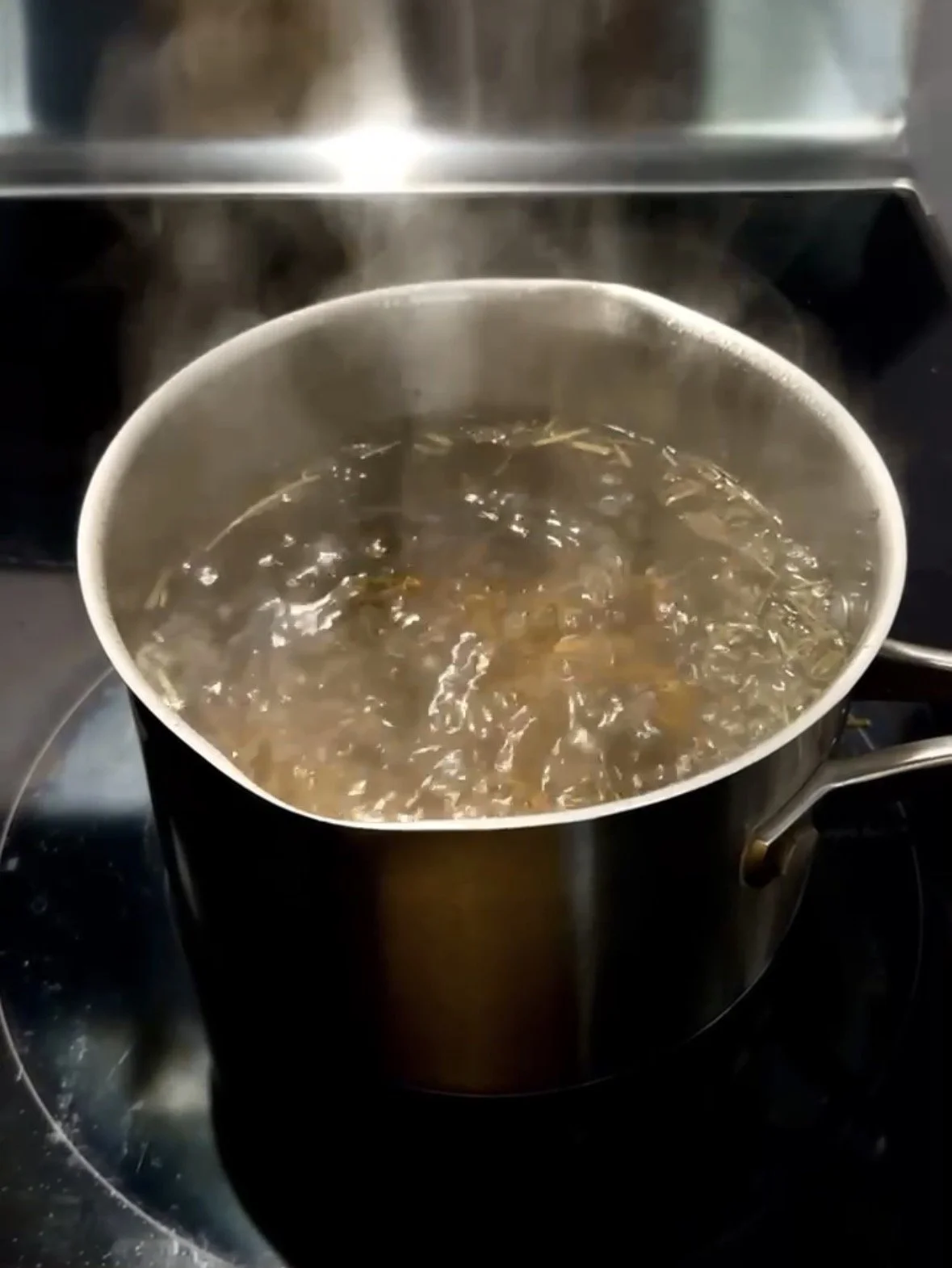
I prefer to boil the herbs on the stove and add the water to the tub through a strainer. You can also use a muslin bag under the water while you fill the tub.
Herbal Muscle Relief Bath
Ingredients
2 tablespoons dried lavender flowers
2 tablespoons dried rosemary
1 tablespoon dried peppermint
1 tablespoon dried rose petals
1 cup Epsom salt (optional)
2–3 drops lavender essential oil (optional)
Directions
Place the herbs into a muslin bag, reusable tea bag, or a square of cotton cloth tied securely with string.
While the tub is filling, add the Epsom salt to the water. Place the herb bundle into the bath and allow it to steep as the tub fills.
Alternatively, you can make a strong herbal infusion by pouring 1 quart of boiling water over the herbs, steeping for 20–30 minutes, straining, and adding the liquid directly to the bath.
Soak for 20–30 minutes.
Why These Herbs?
Lavender (Lavandula angustifolia)
Lavender is rich in volatile oils, particularly linalool and linalyl acetate. These aromatic compounds are responsible for lavender's characteristic scent and many of its traditional uses.
In phytotherapy, lavender is considered a nervous system relaxant. Research suggests that inhaling lavender's aromatic compounds can influence the limbic system, the area of the brain involved in emotions, stress responses, and memory. This may help explain why lavender is often used for tension, stress-related discomfort, and difficulty relaxing.
In a bath, lavender contributes primarily through aromatherapy, creating an environment that encourages both mental and physical relaxation.
Rosemary (Salvia rosmarinus)
Rosemary contains essential oils such as cineole, camphor, and borneol, along with antioxidant compounds including rosmarinic acid.
Traditionally, rosemary is considered a circulatory stimulant. Herbalists have long used it in baths, liniments, and washes intended for tired muscles and fatigue. Its warming, invigorating aroma contrasts nicely with the calming effects of lavender.
Rosemary is often associated with improved circulation and mental alertness, making it a useful herb when exhaustion feels both physical and mental.
Peppermint (Mentha × piperita)
Peppermint contains menthol, one of the best-known plant constituents in herbal medicine.
Menthol activates cold-sensitive receptors in the skin, creating a cooling sensation even when no actual temperature change occurs. This effect is one reason peppermint is frequently included in products intended for sore muscles, tired feet, and headaches.
In a warm bath, peppermint creates an interesting balance between heat and cooling sensation, helping the body feel refreshed after physical exertion.
Rose Petals (Rosa species)
Rose petals are rich in flavonoids, tannins, and aromatic compounds that contribute their distinctive fragrance.
While rose is not generally considered a primary herb for muscle relief, it has a long history as a soothing and uplifting botanical. Traditional herbalists often view rose as calming to both the emotional and physical aspects of stress.
Its inclusion here transforms the bath from a purely functional remedy into a restorative ritual.
Epsom Salt
Epsom salt is composed of magnesium sulfate.
Although research on magnesium absorption through the skin remains mixed, warm Epsom salt baths have been used for generations to ease muscle soreness and promote relaxation. The benefits likely come from a combination of warm water, buoyancy, relaxation, and potentially some magnesium exposure.
From a practical standpoint, many people report feeling less stiff and more comfortable after an Epsom salt soak, regardless of the exact mechanism involved.
How Herbs Work in a Bath
When herbs are added to a bath, several things happen at once.
The warm water helps release aromatic compounds from the plants, creating an aromatherapy experience through inhalation. At the same time, the heat of the water encourages relaxation of tense muscles and increases circulation to the skin.
Some plant compounds may come into contact with the skin during the soak, but for most herbal baths, the aroma, warmth, and overall experience likely play a larger role than significant absorption through the skin.
Herbal Perspective
From an herbal standpoint, this bath combines several complementary actions.
Lavender primarily supports relaxation of the nervous system.
Rosemary contributes a traditionally stimulating and circulatory influence.
Peppermint provides a cooling sensory effect through menthol.
Rose adds a soothing and emotionally restorative element.
Together, these herbs create a blend that addresses more than muscle discomfort alone. They support the broader experience of physical fatigue, stress, tension, and the mental exhaustion that often accompanies a long day on your feet.
This is an important principle in traditional herbalism: sometimes the goal is not simply to target a symptom, but to support the whole person experiencing it.
Making It Your Own
This bath can easily be adjusted based on what is growing in your garden or stocked in your apothecary.
Good additions include:
Lemon balm for a calming citrus note
Chamomile for relaxation
Fresh rosemary sprigs from the garden
Fresh lavender leaves and flowers
A few slices of cucumber for a cooling summer bath
A Simple End-of-Day Ritual
Gardening, standing, walking, and everyday life can all leave the body feeling worn down. This herbal bath won't magically erase every ache, but it can provide a few quiet moments to rest, recharge, and give tired muscles a chance to relax.
Sometimes that's exactly what's needed.