
Growing Chamomile in Containers: A Beginner's Guide
You picked up a packet of chamomile seeds from the store, and you’re like now what.. how does this get me more chamomile tea? I’m glad you asked, because I asked the same thing when I started gardening.
Chamomile is one of the easiest herbs to grow and one of the most rewarding for tea lovers. Whether you have a large garden or just a few containers on a patio, chamomile can provide months of delicate flowers for homemade herbal tea.
Why Grow Chamomile?
Easy for beginners
Produces flowers for tea
Attracts pollinators
Beautiful cottage garden herb
Can be grown in small spaces
Choosing a Chamomile Variety
German Chamomile
This is the type that most tea is made from. It has white flowers with yellow centers, but the centers are taller than with Roman Chamomile. German Chamomile grows about 1-3 feet tall. You harvest the flowers and that’s what you make your tea from.
Annual plant
Produces many flowers
Commonly used for tea
Roman Chamomile
Although it can be used in the same ways that German Chamomile is used, Roman Chamomile is typically milder with a bitter flavor. When growing, it usually stays under a foot tall and is more like ground cover. It still has the White flowers with the yellow center, but they’re flatter than the German variety. This is also a perennial plant and will come back year after year.
Perennial plant
Lower-growing habit
Often used as a groundcover
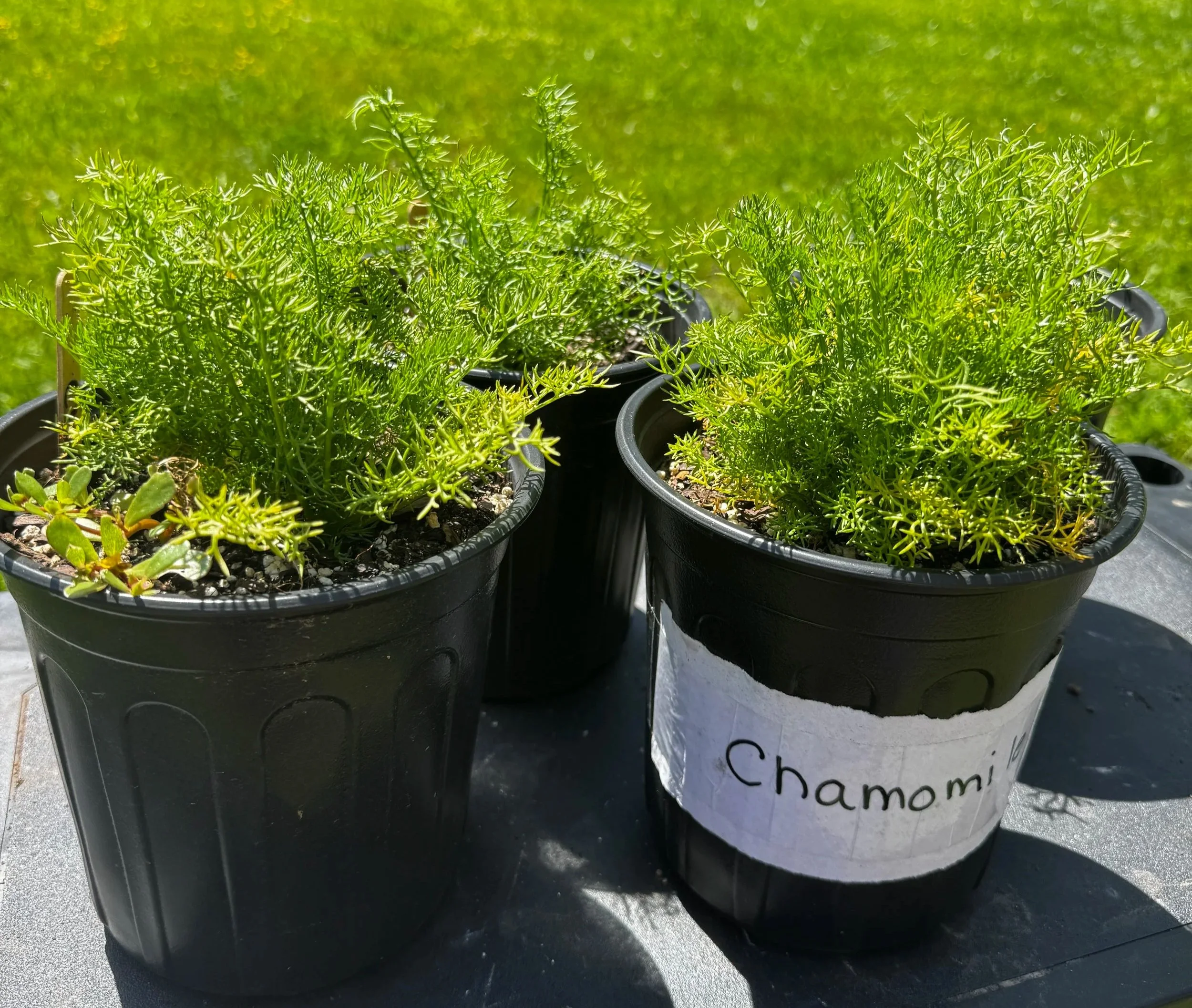
Chamomile that should have been thinned.
How Long Until I Can Harvest Tea?
Since this was the question I was dying to know, let’s address this first before we get into the nitty gritty details of growing chamomile for tea.
Seeds germinate: 1–2 weeks
First flowers: 6–10 weeks after sowing
Peak harvest: midsummer through fall
So you will be looking at 10 weeks or a little more after you plant before you can harvest the flowers. But the good news is that you can harvest flowers multiple time throughout the season and the more you harvest, the more that will grow.
Starting Chamomile from Seed
When to start seeds
Zones 3a-4b:
Start Indoors: May 1-30
Start Outside: Around May 15, after last frost
Put Seedlings outside: Around May 30, 2 weeks after last frost
Zones 5a-7b
Start Indoors: April 1-30
Start Outside: Around April 15, after last frost
Put Seedlings outside: Around April 30, 2 weeks after last frost
Zones 8a & 8b
Start Indoors: March 1-30
Start Outside: Around March 15, after last frost
Put Seedlings outside: Around March 15, 2 weeks after last frost
Zones 9a & 9b
Start Indoors: February 1-28
Start Outside: Around February 15, after last frost
Put Seedlings outside: Around February 15, 2 weeks after last frost
Zones 10a- 11b
Not recommended
Chamomile seeds are tiny and need light to germinate.
Fill seed trays or small pots with moist seed starting mix.
Sprinkle seeds on the surface.
Press them gently into the soil.
Do not bury them or only barely cover them with vermiculite.
Mist lightly with water.
Place under grow lights or in a sunny window.
Germination Time
German chamomile typically germinates in 7–14 days.
Roman chamomile can take 10–21 days.
Keep the soil consistently moist during this period.
Germination Temperature
The ideal soil temperature is 65–75°F. A heat mat can speed germination, but chamomile usually sprouts well without one.
Light Requirements for Seedlings
As soon as seedlings emerge, provide 14–16 hours of light per day. If using grow lights, like these, keep them 2–4 inches above the seedlings.
Without enough light, seedlings become tall, thin, and floppy.
Thinning Seedlings
Chamomile seeds are often sown heavily because they are so small. Once seedlings have two sets of true leaves, thin them so each plant has about 2–4 inches of space. Crowded plants compete for light, water, and nutrients, resulting in weaker growth.
I have a tendency to sow too many seeds in one pot. The seedlings looked healthy at first but quickly got crowded and needed thinning to continue growing well. In my case, it turned out just fine and I am upgrading to a raised bed for them to have more space, but if you are planning to stick with containers, you might want to ensure that you thin the seedlings before you get bushy clumps.
Hardening Off
Before moving indoor seedlings outside:
Place them outside in shade for a few hours.
Gradually increase sun exposure over 7–10 days.
Bring them inside at night if temperatures drop too low.
This helps prevent transplant shock. I typically place my babies in the sun in the afternoon for a few hours to start in April. I don’t leave them outside when it’s windy (we can get 40 mph gusts) or when it rains (gusts and rain are a bit much for them). I bring them in at night because it’s still in the 40’s at night. Once we start hitting the 50s at night I will leave them out all day and night in their pots on a shelf. I find that they do really well moving from inside to outside and actually thrive the sooner I can get them outside.
When to Transplant
Transplant when:
Plants have 2–4 sets of true leaves
Roots are established
Frost danger has passed
Space plants:
German Chamomile: 8–12 inches apart
Roman Chamomile: 6–12 inches apart
Sunlight
Full sun, though in hot climates, partial afternoon shade is ideal. Full sun is 6 or more hours of sun a day, so give it the sunniest spot in your yard to grow.
Soil
Mix compost into the soil when starting. Chamomile likes a rich soil with a pH ranging from 5.6-7.5. FYI- your average mix of compost and garden soil that you can buy from the store has a pH of 6.0 -7.0. So don’t worry too much about knowing the exact numbers.
If you’re planting in containers, you might want to adjust the mixture a little bit to include more lighter materials like peat moss, sphagnum moss, and perlite that help increase draining and moisture retention so you’re plants stay moist but not bogged down with water.
Fertilizer
I’m going to be honest here, depending on the soil you use, you might not need it. Yes, mot sites are going to recommend it because a lot of plants will use a lot of it or you end up washing it out every time you water. But for chamomile, I have used a miracle grow garden soil, black cow compost, peat moss, perlite, and worm castings in my potting soil mix and I don’t fertilize my chamomile. It seems to be pretty happy.
Also, aromatic herbs like chamomile, calendula, yarrow, thyme, etc produce their strongest flavors and highest concentrations of volatile oils (the things that make your tea good) under moderate stress, not in comfy cozy rich soil conditions.
Water
Immediately after planting and then 1 inch of water per week until established. After that, it likes a little bit of drying out between watering. The typical rule of thumb, or finger, is to stick you finger 1 inch deep in the soil at the plant roots and see if it’s moist. If it is, no water needed. If it’s dry, give it drink.
Container Size
Good drainage is a must. I typically will start my seeds in these starter pots or these 1 gallon pots. Now that I have small bushes, I will be moving them into a raised bed. If you want to stick with containers, when they get to be a month or so old, they might need to be moved into a 5 gallon container, or a shallow bed.
My Experience
I typically start all my seeds indoors, and chamomile was no different. My first attempt got me a small bush in a 1 gallon pot, but my watering the leaves caused mold on the leaves and it had to be tossed. Now I have 4 plants that are growing and at that same point again. But they do need more space than the 1 gallon pot they’re in now. So they will be moving into the raised bed here soon.
Common Problems
Leggy Seedlings
This is typically caused from not enough light. If you’re light source is too far away, the seedlings will stretch to get more light. This is typical when you start seeds indoors. Although the sun is super far away, it’s strong enough to prevent this.
Poor Flower Production
Describe causes and solutions.
Overwatering
You will know if you are watering it too much if the bushy-ness starts getting really soft and floppy. Stop watering for a few days and let it dry out. When the “bush” becomes a little stiffer and the soil is dry, begin watering again. But don’t over do it again.
Harvesting Chamomile
Harvest flowers when they are fully open and dry.
The best time is usually in the morning after the dew has evaporated but before the hottest part of the day.
Pinch or snip off the flower heads, leaving the stems and foliage behind so the plant can continue producing.
The more flowers you harvest, the more flowers the plant often produces.
Drying and Storing Chamomile
Chamomile is one of the faster herbs to air dry. Allow them to dry in a warm, well-ventilated location out of direct sunlight. You can also use a dehydrator on its lowest setting.
For flower heads harvested on a dry day and spread in a single layer:
Warm, dry room with good airflow: 5–7 days
Average indoor conditions: 7–14 days
Humid conditions: 2–3 weeks or longer
The flowers are fully dry when:
The petals feel papery and crisp.
The yellow center is hard and dry, not spongy.
The flower head crumbles easily between your fingers.
There is no cool or damp feeling when squeezed.
For the best tea quality:
Harvest flowers when fully open.
Pick in the morning after dew has dried.
Dry out of direct sunlight to preserve flavor and beneficial compounds.
Use a screen, drying rack, or shallow basket rather than piling flowers deeply.
Store dried flowers in an airtight jar away from heat, moisture, and sunlight.
Properly stored chamomile typically maintains good flavor for about a year.
Traditional Uses of Chamomile
Chamomile has been used for centuries as a relaxing herbal tea.
Traditionally, it is associated with calmness, relaxation, and easing tension. Many people enjoy a cup before bed as part of a nighttime routine.
If you have allergies to plants in the ragweed family, use caution when trying chamomile for the first time.
Final Thoughts
If you're new to gardening, chamomile is one of the best herbs you can start with.
The seeds are inexpensive, the plants are forgiving, pollinators love the flowers, and after a couple of months you'll be harvesting blossoms for your own homemade tea.
Not bad for a tiny packet of seeds.